
Diagnose whether weak leads are a targeting problem, a response problem, or both, so you fix the leak before buying more ads.

Key Takeaway: Weak leads usually come from low fit, weak follow-through, or both, and this matrix shows you which fix moves your pipeline fastest.
You are in the conference room with your leadership team. Someone’s phone keeps buzzing on the table. Nobody picks it up. The whiteboard is full of numbers. Job counts. Close rates. Lead sources. Sales is on one side of the table. Marketing and office staff on the other. You can feel the meeting tilting toward blame instead of clarity.
Your sales lead taps the board. “These leads are weak. They are just price shoppers.”
Your marketing rep fires back. “We are sending a ton of opportunities. The phones are ringing. Maybe sales is not closing.”
Dispatch jumps in. “Half of what comes in is junk. Wrong size. Wrong buildings. Wrong zip codes.”
Everyone is frustrated. Everyone has a point. You look at the board and feel the thing nobody wants to say out loud. Are our leads weak because our fit is off. Or because our follow-through is broken.
This is where you stop blaming “bad leads” in general and start getting specific.
If you are weighing an HVAC business coach or consultant to fix lead quality, read HVAC Business Coach vs TradeSworn first so you pick the lane that actually tightens fit and follow-through instead of just buying more ads.
Every lead engine has two sides:
When leads feel weak, it is usually because:
Most shops blame their leads when they should be blaming their lens. The market is not “sending you bad leads.” Your targeting is inviting the wrong people, or your intake is killing the right ones. Either way, the fix is internal.
This post helps you sort out which problem you really have before you pour more money or energy into it.
Picture a simple grid.
Left to right: Fit (Low to High).
Bottom to top: Follow-Through (Low to High).
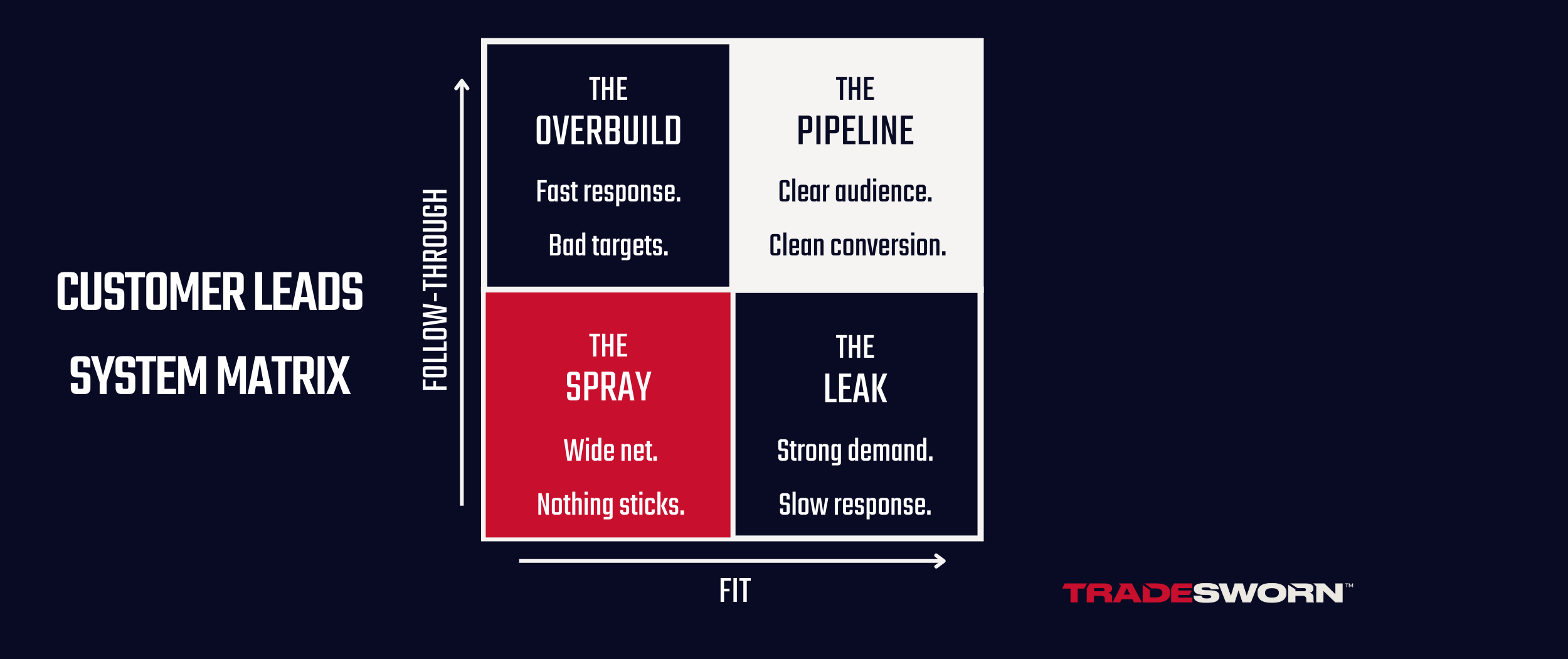
That gives you four types of shops.
1. Low Fit, Low Follow-Through: The Spray
You are throwing reach at the market and hoping something sticks.
You will see:
2. High Fit, Low Follow-Through: The Leak
You are winning the right attention and losing it in the first sixty seconds.
You will see:
3. Low Fit, High Follow-Through: The Overbuild
Your machine is efficient. Your targets are not.
You will see:
4. High Fit, High Follow-Through: The Pipeline
You will see:
The goal is not to be perfect. It is to know which box you are in today so you know what to fix first.
You do not need complicated software to place your shop on that grid. You need one clear week of honesty. Take last month and run this test.
Step 1: Define A Strong Lead For Your Shop
Get specific on paper:
For example: A strong lead for us is a building owner or property manager in our core counties with at least three packaged units or a central plant, looking for preventive maintenance, retrofit, or replacement, not one-off lowest price emergency calls.
You will refine this over time. Start with something you would be proud to show your team.
Step 2: Tag Last Month’s Leads As Strong Or Weak Fit
Pull the last 50 inbound leads where you had at least some information.
For each one, ask:
Then tally:
Example:
If only 18 out of 50 match, you already know something about fit. Your message and targeting are not tight enough. A 36% fit rate means you are paying to generate leads you do not want 64% of the time.
If your cost per lead is $80, that is roughly:
That $2,560 is a monthly targeting tax.
Step 3: See What Happened To The Strong-Fit Leads
Now look only at the 18 strong-fit leads.
For each one, write:
Then tally again:
Example:
Now you can see the shape:
You are not arguing feelings anymore. You are looking at simple math.
Use two ratios to place yourself:
Then map:
One example:
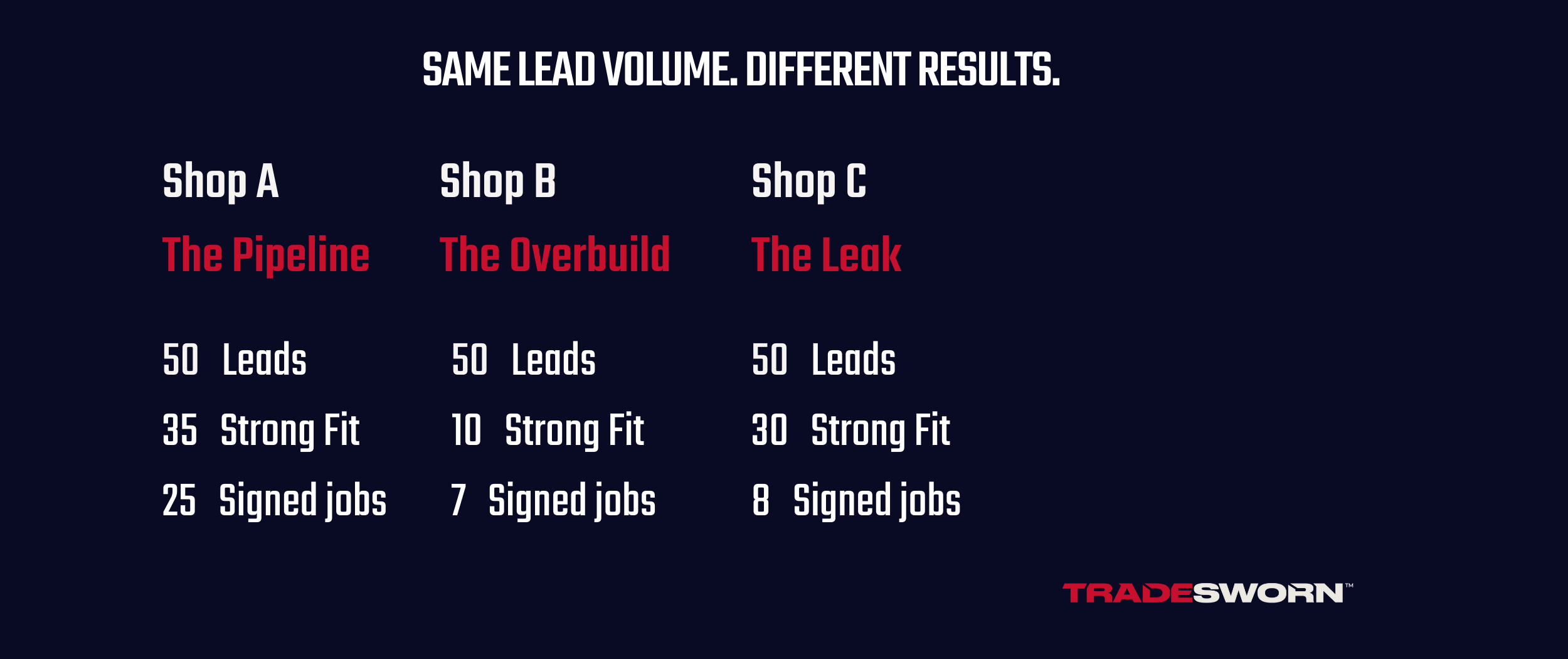
Shops B and C will both say “our leads feel weak.”
They have completely different problems.
One day, whether you sell or bring in a partner, someone serious will ask:
Buyers do not pay for “we are always busy.” They pay for “we know exactly how we got busy.” Predictable fit and follow-through lowers perceived risk. Lower risk earns better terms.
They want to see:
Shops that can show high fit and high follow-through look less risky. Less risk usually means better terms when it is time to talk price.
Even if selling feels far away, building a Pipeline shop now makes the next few years easier to run.
If You Are The Spray
If You Are The Leak
If You Are The Overbuild
If You Are The Pipeline
The Pipeline shop is not the one that never says no. It is the one that knows what to say no to. Protecting capacity for A-work beats filling the calendar with anything that answers the phone.
This stack is built to move you one quadrant closer to The Pipeline, whichever box you start in.
Here is a practical way to start.
Tomorrow morning, before you check email:
1. Open your call log, CRM, or lead sheet
2. Pull the last 7 days of inbound leads
3. Mark two boxes for each: Strong-fit? Booked next step?
By Friday, you'll know which quadrant you're in.
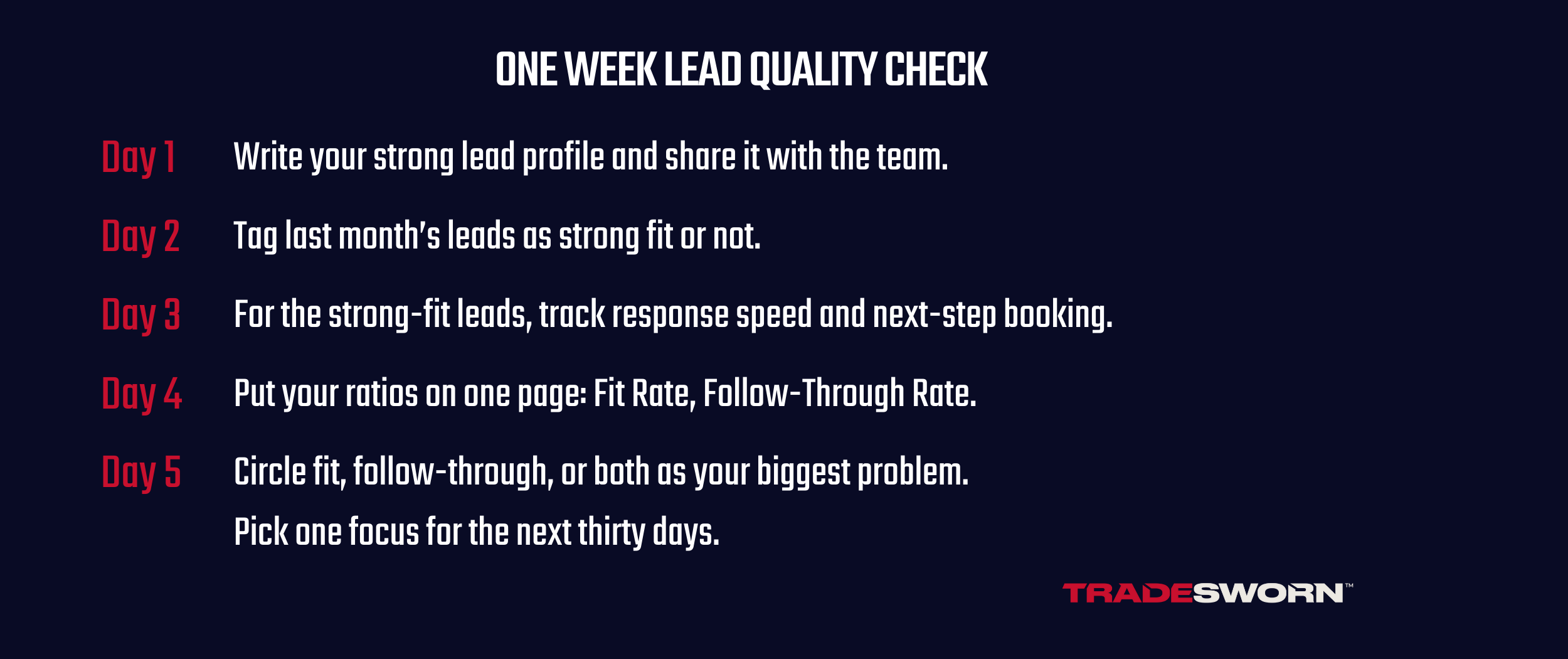
Run those same numbers again next month. That is the beginning of your Lead Scorecard.
From here, the rest of the Customer Leads stack helps you work the problem instead of arguing about it.
You now know which side is broken.The next four posts show you how to fix it.
If you are trying to figure out why your leads feel weak or unpredictable, run this stack over the next 30 to 60 days.
Run your Lead Scorecard alongside these posts so you can see the numbers move, not just feel busy. If you want a quick scorecard now, run this Lead Quality Check now and get your answer in less than a minute.
When you are ready to design a lead engine that fits your crews and your plans, that is where the Customer Leads Workplan comes in.

Here are the top toolkits HVAC owners are reading, using, and sharing to work smarter every week.

Stop stuffing your calendar with C-work. Run the A/B/C job audit to protect crew time and margin from the jobs that quietly drain both.

Fix the first 60 seconds with two-lane intake, four-question qualification, and booked next steps so good leads stop dying in your own phone system.

Stop chasing vanity clicks. Track what actually converts to booked jobs and margin so you know what's working and what's just noise.

Audit every marketing channel by what it costs to book real work, not cheap leads. Finally see what earns its spot and cut the rest.

No spam. Get real advice and proven tactics to win more jobs and keep more profit.
“We cut the noise, ran the plan, and made more in two quarters than we did all last year.”
— Sean, Massachusetts

