

Eight quick checks to see whether your pipeline is bringing in real jobs or just keeping the team busy.
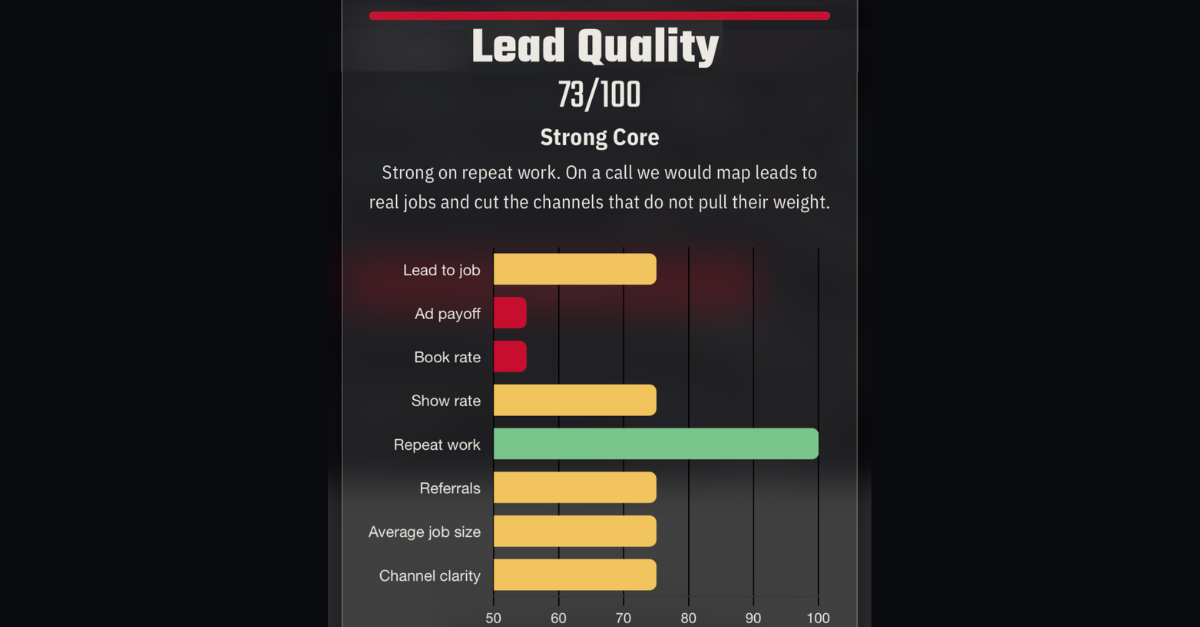
See what is bringing in real work, what is wasting time, and what to fix first.
A lead only matters if it turns into work. This shows whether the calls coming in actually become jobs.
Ad payoff shows whether your channels earn their keep. If spend is not turning into booked work, it is noise.
Book rate shows how often a lead makes it onto the calendar. If this is weak, the funnel is leaking early.
Show rate tells you whether booked jobs actually happen. Missed appointments burn time and leave holes in the day.
Repeat work is the clearest sign the pipeline is bringing in the right customers. It lowers acquisition pressure and steadies the mix.
Referral work usually closes cleaner and costs less to win. If referrals are thin, the customer experience is not pulling its weight.
Average job size shows whether the pipeline is full of real work or low-value noise. Busy does not help if the ticket stays small.
Channel clarity shows whether you can trace leads back to the source. If you cannot see what is working, you cannot scale it or cut it.
They burn dispatcher time, drag down average job size, and keep the team busy without building the kind of work you actually want.

Pinpoint whether the pipeline is filling with the right jobs, the right zip codes, and the kind of work that actually pays.

Turn channel, campaign, and booked-job data into a clearer read on which lead sources earn their spot and which ones waste time.

See where leads are dropping between click, call, booking, and show-up so more good jobs actually land on the calendar.

Use the score with your Customer Leads Workplan to strengthen the mix of repeat customers, agreement work, and word-of-mouth jobs.
Start with the Lead Quality Check to see what’s off, or go straight to the Customer Leads Workplan if you’re ready to fix it.
